
Fact-Checked & Reviewed for Technical Accuracy
Reviewed for Accuracy
- Author: Bay Area Demolition and Hauling Editorial Team
- Reviewed by: John Alviter
- Reviewer Role: Founder & Lead Demolition Contractor
- Company: Bay Area Demolition and Hauling
- Google Business Profile: Bay Area Demolition and Hauling
- Review Snapshot: As of September 2026, our Google Business Profile shows 271 reviews with a 5.0 average star rating. Because review counts change, homeowners should check the live profile before hiring.
- CSLB License Number: #1123506
- License Classification: C-21 (Building Moving/Demolition)
- Last Reviewed: September, 2026
An outdoor pergola is designed to be an architectural asset, creating an open-air framework for climbing vines, hanging lights, and shaded summer gatherings. However, because these structures feature an open overhead lattice with no solid roofing or protective flashing, they are uniquely vulnerable to weather exposure. Decades of intense South Bay summer heat alternating with heavy winter rain can quietly rot timber beams directly above your outdoor living space, turning a beautiful feature into a structural hazard.
If your backyard framework is splitting, bowing, or swaying, dismantling it is the first step toward reclaiming your outdoor footprint.
Whether you want to clear the zone for a clean expanse of grass, install a modern outdoor kitchen, or lay down fresh stone pavers, removing a backyard pergola in San Jose requires a clear understanding of overhead engineering, specialized California disposal laws, and local property regulations.
 Quick Planning Answer for South Bay Homeowners
 Quick Planning Answer for South Bay Homeowners
On average, a professional backyard pergola deconstruction in the San Jose area ranges from $1,500 to $2,500+.
- A small, freestanding vinyl or lightweight timber frame typically runs between $1,000 and $1,500.
- Medium-sized wooden structures run between $1,500 and $2,000.
- A large, custom-engineered timber pavilion attached directly to a home’s roofline or anchored into deep-set concrete support piers can range from $2,000 to $2,500+, depending on backyard access, vine density, and site complexity.
What Makes Pergola Demolition Unique?
It can be tempting to view an open shade cover as just a collection of basic backyard lumber, but dismantling an overhead framing grid involves unique mechanical elements that set it apart from clearing out a standard shed or fence.
The Physics of Overhead Tension
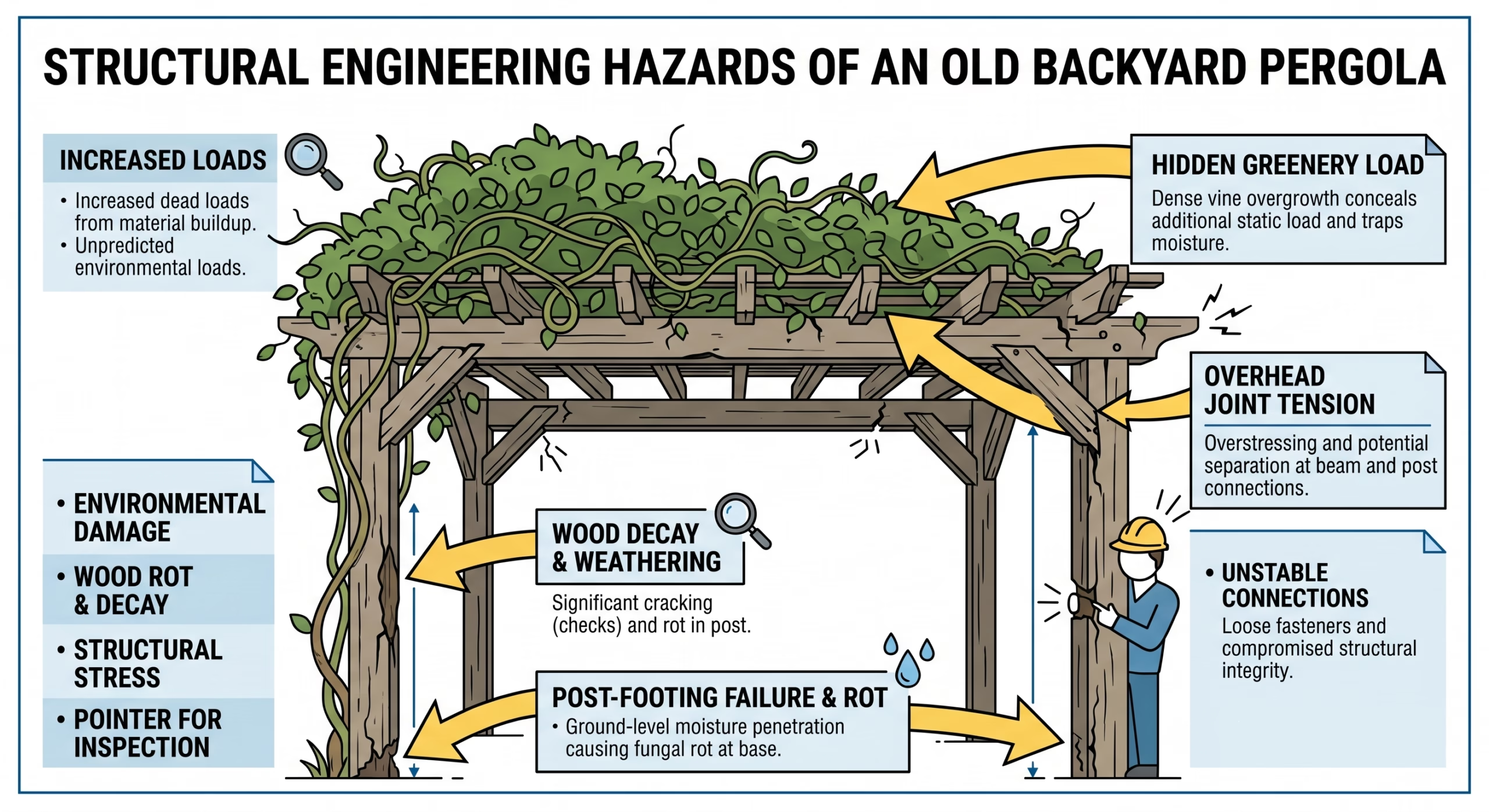
A pergola relies on a precise balance of interlocking notches, heavy-duty structural screws, and vertical columns to remain rigid. Over time, as timber warps, dries out, and twists from solar exposure, those connection points are subjected to significant physical tension. Knocking out a single support post or cutting a main crossbeam out of order can cause the entire overhead canopy to shift rapidly and collapse sideways without warning.
The Hidden Weight of Vegetation
Many older pergolas in Santa Clara County are heavily overgrown with mature wisteria, ivy, or grapevines. While this provides excellent shade, decades of continuous growth create massive woody trunks and thick root canopies that add hundreds, and sometimes thousands, of pounds of dead weight to the top of the frame. Removing these vines safely requires a systematic, layered approach to prevent the heavy greenery from pulling a weakened wooden framing system down onto the work area.
Structural Configurations: Detached vs. Attached
How your outdoor feature was originally anchored dictates the overall complexity of the teardown process and determines how your project must be staged.
Freestanding Pergolas
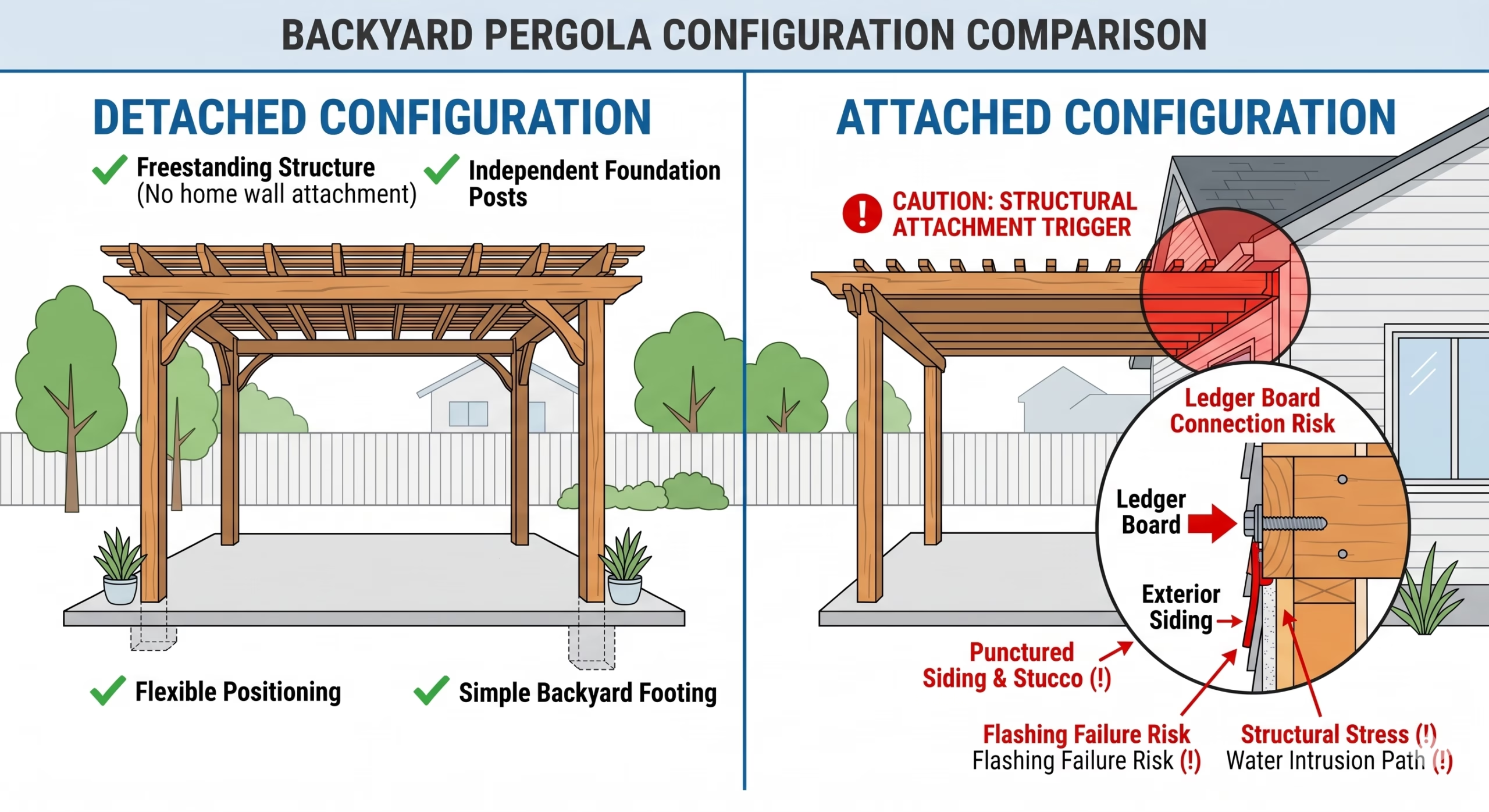
A freestanding pergola stands entirely on its own, supported by independent vertical columns anchored into the yard, a patio slab, or concrete footings. These teardowns are typically highly straightforward. The primary focus of the demolition crew is to isolate the overhead load, systematically lower the cross-beams to the ground, and ensure that nearby property lines, shared fencing, or landscape beds remain undamaged.
Attached Pergolas
An attached pergola shares structural framing, ledger boards, or heavy hardware connections directly with your primary home’s exterior wall or roofline. Removing an attached structure is significantly more complex because pulling away beams can easily damage exterior stucco, tear siding, or ruin critical roof flashing and water sealing. Safely detaching these connections requires precise, controlled execution to preserve your home’s weatherproofing envelope.
Cost Breakdown Matrix by Structure Type
To help you map out your upcoming backyard project budget, this matrix outlines typical regional pricing based on structure styles and real-world property layouts in Santa Clara County:
| Structure Size & Material | Foundation Type | Estimated Cost Range | What Is Included in the Project Scope |
| Small (6×8 to 8×10) Light wood, vinyl, or aluminum panels |
Bare dirt, brick pavers, or light skids | $1,000 – $1,500 | Full structural breakdown, hardware sorting, immediate vehicle loading, and a clean site sweep. |
| Medium (10×12 to 12×12) Standard wood framing & lattice layouts |
Wood deck platform or concrete anchors | $1,500 – $2,000 | Vine clearing, overhead rafter deconstruction, post dismantling, and complete debris haul-off. |
| Large (12×16 to 14×20+) Heavy timber framing or stucco columns |
Heavy concrete perimeter or deep piers | $2,000 – $2,500 | Multi-stage overhead dismantling, structural stability monitoring, heavy loading, and large-scale commercial hauling. |
| Concrete Pier Add-On Deep-set structural post bases |
Buried reinforced concrete support piers | $500 – $1,000 | Mechanical breaking equipment, deep pier extraction, high-density weight loading, and specialized recycling fees. |
San Jose Regulations and Permit Rules
When you are clearing out an open-air shade feature, you don’t always have to navigate extensive municipal paperwork, but local building codes and property limits must still be respected.
Height Thresholds and Setbacks
The City of San Jose maintains strict zoning codes governing exactly where accessory structures may be located on your lot. If a freestanding pergola sits inside your rear or side yard setback lines (the buffer zones between your house and your neighbor’s fence), it is subject to strict height limitations. If an old structure violates modern setback parameters or stands exceptionally tall, tearing it down clears up a major code compliance issue, which may help if you plan to sell your home in the future.
The Structural Attachment Trigger
If your pergola is structurally tied to your home’s main framing via a ledger board, the city views it as an extension of the primary residential building envelope rather than a simple freestanding garden decoration. Modifying or removing an attached structure requires careful validation to ensure the remaining walls stay completely weatherproof. If your yard clearing project involves a larger footprint, such as an old attached patio roof or a connected carport, it is always wise to cross-reference local rules for comprehensive Residential Demolition or Garage Demolition work.
Navigating the Base: Decks, Slabs, and Footings
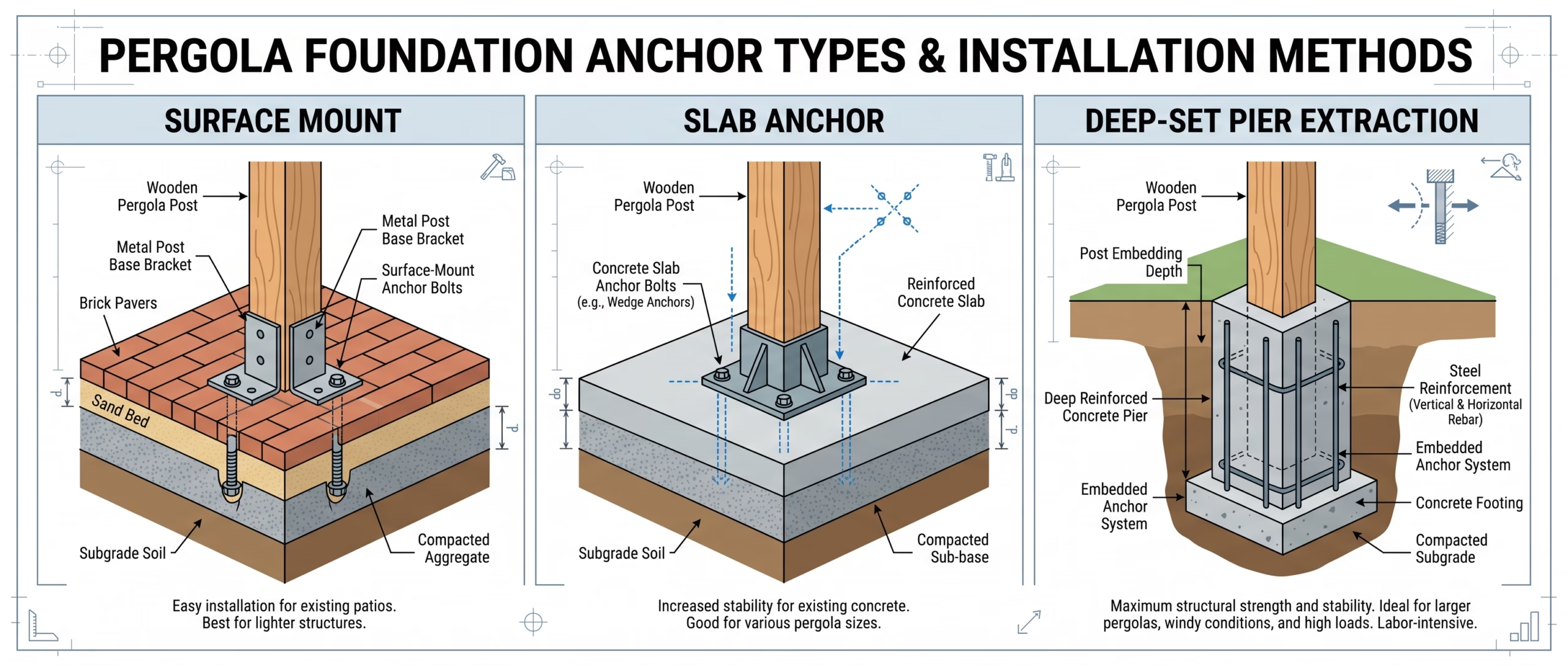
A pergola is rarely built on bare dirt; its heavy vertical columns are almost always anchored to an existing backyard foundation feature. When planning your removal, you must make a firm decision regarding the ground beneath the frame.
The Deck Integration Challenge
It is common for backyard pergolas to be built directly on top of or integrated into an outdoor entertaining platform. If your wood or composite platform is still in pristine condition, the columns must be surgically unbolted and cut flush to prevent destroying the surrounding floor planks.
However, if the overhead framework is rotting, the floor beneath it is often suffering from the exact same water damage. If the entire layout has reached the end of its lifespan, pairing your project with a complete Deck Removal scope allows a professional crew to clear the entire footprint down to bare dirt in a single, efficient phase.
Anchors and Pier Extraction
If your pergola posts are anchored into individual concrete support piers buried deep in your landscaping beds, leaving those heavy concrete blocks behind will create immediate obstacles for future planting or grading. Breaking up and extracting deep concrete column footings requires mechanical breakers and automated loaders. If your project requires clearing out the underlying base or a cracked patio pad, ensuring full-scale Concrete Removal is detailed in your initial quote prevents unexpected pricing surprises later.
California’s Treated Wood Waste (TWW) Mandates
You cannot simply load thousands of pounds of old patio lumber into a residential trailer and pull up to a standard local landfill. Because pergolas are completely exposed to the elements, many outdoor wood pergolas are built with pressure-treated lumber designed to resist termites, moisture, and wood rot.
Under California environmental law, this chemical-injected material is strictly classified as Treated Wood Waste (TWW). The state enforces rigid containment, logging, and transportation rules to ensure these chemical protectants do not leach into local water tables:
- Old pressure-treated beams cannot be mixed with standard residential green waste or clean wood recycling piles.
- TWW cannot legally be burned, chipped into garden mulch, or dropped off at uncertified municipal transfer stations.
- The material must be logged, tracked, and transported exclusively to authorized TWW facilities or to approved disposal sites specifically authorized by the state to accept chemically treated building components.
Partnering with an established local team automatically handles all this complex environmental tracking behind the scenes, keeping your residential property and debris handling aligned with state rules.
Handling Built-In Features Safely
While standard pergolas are simple timber grids, many high-end Bay Area outdoor spaces feature integrated comfort elements that require careful handling during a deconstruction project:
- Integrated Lighting & Fans: If your structure features low-voltage step lights, overhead chandeliers, or structural string lights fed by permanent exterior conduit, the power must be located, turned off, and safely isolated at the breaker panel before any wood is cut.
- Shade Motoring Systems: High-end modern pergolas often include automated louvers or motorized privacy screens. These heavy mechanical units add substantial weight to the top of the frame and must be carefully dismantled first.
- Misting or Gas Lines: If your columns are wrapped around active lines feeding patio heaters or outdoor misting systems, those lines must be safely capped off at the main property valve to eliminate utility hazards.
Why Professional Demolition is the Smart Choice
Attempting to tackle a major overhead deconstruction project with a basic ladder and a hand saw is a recipe for property damage and severe personal injury. Heavy timber components that look lightweight from the ground are incredibly dense, and an unbalanced framework can torque or twist unexpectedly during cutting, pinning a worker, or crushing adjacent property assets.
Handing the heavy lifting over to an established, fully insured specialist team completely streamlines the entire backyard renovation:
- Property Protection: Pergolas are frequently built directly over expensive outdoor tile or tightly squeezed against neighborhood vinyl fencing. A professional crew uses heavy-duty physical shielding to ensure your surrounding assets remain completely untouched by falling timber.
- Surgical Precision: If your pergola is attached to your home, a professional team knows exactly how to detach the primary ledger connection without tearing up your home’s exterior stucco or exposing your wall cavities to water intrusion.
- Immaculate Cleanup: The job isn’t done when the lumber is knocked down. The entire workspace is meticulously raked, swept, and cleared with heavy-duty industrial magnetic rollers to collect stray fasteners and screws, leaving your patio surface completely clean and ready for your next design phase.
If you are ready to open up your backyard layout safely and efficiently, explore our dedicated Pergola Removal Services to request a quick, free quote, or browse our comprehensive Residential Demolition services to kickstart your upcoming home renovation today.
Checklist: Before You Request a Quote
Gathering these quick layout details before reaching out for an estimate helps our team provide the most accurate, transparent project estimate possible:
- Clear photos of the pergola from a few angles (including the connection points if it touches the house)
- Approximate footprint dimensions (Length, width, and estimated overhead height)
- Whether the structure is built out of wood, vinyl, or heavy-gauge aluminum
- Whether the vertical posts are bolted to a concrete patio or buried deep in landscaping dirt
- Whether the underlying floor system or buried concrete footings should stay or go
- Photos of the side gates and paths leading from your driveway to the backyard structure
- A brief description of what you plan to create or install in that open footprint next
Frequently Asked Questions
How much does it cost to remove a standard 10×12 pergola in San Jose?
A standard 10×12 freestanding wooden pergola removal typically costs between $1,500 and $2,000. The exact price varies depending on how easy it is for our crew to access your backyard layout, the total weight of the lumber, and whether buried concrete footings need to be dug out.
Can you remove a pergola without ruining the concrete patio underneath?
Yes. If your concrete foundation or stone paver layout is in good condition, we can carefully unbolt the above-ground structural columns while using protective padding to shield your patio surface from any impact damage.
Do I need a permit from the City of San Jose to tear down a pergola?
If your detached backyard pergola is 120 square feet or less and has no known connected utilities (such as electrical wiring or gas lines), it may be exempt from a building permit. If it exceeds 120 square feet, attaches directly to your home’s framing, or has active utility integrations, a city permit may be required before structural demolition begins.
Can old pergola wood be recycled?
While clean metal fasteners and aluminum brackets can be recycled, the primary structural wood lumber from an outdoor pergola is almost always chemically treated to withstand weather. This means it must be handled under California’s Treated Wood Waste (TWW) rules and transported to specialized eco-landfills rather than standard wood recycling yards.
What happens if my pergola has active electrical wiring?
Make Bay Area Demo & Hauling your very first call. Our crew will evaluate your exterior wiring during our initial site assessment. For standard low-voltage lines or basic exterior wire terminations, our crew can review the setup and let you know whether a licensed trade professional is needed, eliminating the logistical stress of coordinating multiple outside companies.
Can I safely remove a backyard pergola by myself?
While taking down a tiny, lightweight vinyl garden arbor is a manageable DIY task, removing a large timber patio pergola presents severe overhead structural hazards. Heavy crossbeams can warp and fall unpredictably during cutting, and handling thousands of pounds of weathered materials without professional safety rigs can easily lead to serious injury or severe property damage.