
Fact-Checked & Reviewed for Technical Accuracy
Reviewed for Accuracy
- Author: Bay Area Demolition and Hauling Editorial Team
- Reviewed by: John Alviter
- Reviewer Role: Founder & Lead Demolition Contractor
- Company: Bay Area Demolition and Hauling
- Google Business Profile: Bay Area Demolition and Hauling
- Review Snapshot: As of September 2026, our Google Business Profile shows 271 reviews with a 5.0 average star rating. Because review counts change, homeowners should check the live profile before hiring.
- CSLB License Number: #1123506
- License Classification: C-21 (Building Moving/Demolition)
- Last Reviewed: September, 2026
Imagine walking out into your backyard on a beautiful, sunny Bay Area morning. You have a warm cup of coffee in your hand, and you are ready to step out onto your deck to enjoy the fresh air. But as you take a step, a board creaks loudly. You look down and notice the wood looks dark, soft, and split. When you lean against the railing, it wobbles just a little bit too much.
Suddenly, your peaceful morning turns into a worry session.
An outdoor deck is a wonderful place for summer barbecues and family hangouts. But because decks live outside, they are constantly fighting against the elements. Over time, sun, rain, foot traffic, and outdoor furniture can take a heavy toll on the wood framing.
If your backyard deck is looking worse for wear, you are likely facing a tough choice: Do you pay to patch it up, or is it time to tear the whole thing down?
Deciding between deck repair vs deck removal in Palo Alto does not have to be a guessing game. Understanding local city rules, hidden safety hazards, and financial factors can save you from costly fines and project delays. Let’s break down everything you need to know about Palo Alto deck rules, structural warning signs, and how to safely get your backyard back.
 Quick Answer for Palo Alto Property Owners
 Quick Answer for Palo Alto Property Owners
Repair may make sense if the damage is limited to cosmetic issues like faded stain, surface mold, a few loose surface planks, or minor railing adjustments. However, full deck removal is the safer, smarter choice if the structure has widespread rot, soft framing, or if core foundation components like the support posts, framing joists, or the main house ledger board are compromised.
Additionally, keep local rules in mind. The City of Palo Alto requires a permit for deck work when the structure stands more than 30 inches above finished grade, attaches directly to a building, requires steps, or is part of a required home exit path.
Why Structural Integrity Matters for Your Deck
It is your property, so it is natural to wonder why a failing deck is such a big deal.
A deck is a real structure that people stand on, sit on, and walk across. When it is sound, it adds wonderful, usable outdoor space. But when the framework starts to fail, it becomes an immediate safety risk. Municipalities and structural experts enforce strict rules around deck conditions to protect you, your neighbors, and the local environment. Demolition and replacement plans are tracked closely for several major reasons:
- Property Line Safety: Many older backyard decks extend right next to back fences, side yards, and neighbor property lines. A controlled teardown ensures nearby areas and shared fencing are not damaged during the removal process.
- Utility Hazards: Decks frequently cover up live electrical wires for outdoor lighting, outlets, hot tub connections, or gas lines for outdoor grills. A careful planning process ensures these lines are handled correctly to prevent shock or fire risks.
- Property Values and Disclosures: Maintaining documented property updates helps protect your home value. The City of Palo Alto tracks structural alterations, and California state law requires home sellers to disclose known unpermitted structural work or hazardous conditions when selling a property.
Structural “Red Flags”: Assessing the Core Foundation
The hard part about a failing deck is that problems are not always obvious from the top. The walking surface might look worn but safe, while a serious issue sits hidden underneath.
Grab a flashlight, head underneath the platform, and look for these critical structural red flags:
1. Rotting Support Posts
The vertical wooden posts that go into the ground carry the entire weight of the deck. If these posts sink into damp soil or trap water, they will begin to rot at the base, causing the deck to tilt, lean, or sink unevenly.
2. Soft Framing Joists (The Screwdriver Test)
The horizontal boards underneath your deck are called joists. Take a flathead screwdriver and gently push the tip into the wood framework. If the screwdriver slides into the lumber easily like soft butter, you are dealing with active wood rot that cannot be safely patched or ignored.
3. An Unsafe Ledger Board Connection
The ledger board is the critical piece of timber that attaches your deck directly to the side of your house. According to the North American Deck and Railing Association (NADRA), ledger board failures—often caused by missing flashing, rusted fasteners, or wood rot—are the leading cause of catastrophic deck collapses. If this connection becomes loose, cracked, or spongy, the entire structure is unsafe and requires immediate professional replacement.
Deck Repair vs. Removal: The Comparison Matrix
To help visualize your options, this clean breakdown shows when a simple surface fix is smart versus when it is time to call in a professional demolition crew to clear the space:
|
The Condition Type |
Real-World Action & Consequence |
|
Faded stain, surface dirt, or minor mold |
A deep pressure washing and a fresh coat of sealant will make the wood look brand new. Repair is the best choice here. |
|
A few cracked or splintered floorboards |
Individual surface boards can be uninstalled and replaced easily without touching the framework underneath. |
|
Wobbly or loose handrails |
Often caused by loose bolts or weak brackets. Tightening or replacing the hardware usually solves the problem easily. |
|
Soft, spongy wood on support posts or joists |
Structural rot cannot be safely patched. The main frame must be dismantled completely by an experienced crew. |
|
The deck pulls away slightly from the house |
Indicates major ledger board failure, making the entire structure an immediate safety hazard. Full removal is required. |
|
Repair costs are more than 50% of a new deck |
It makes better financial sense to clear the footprint and start fresh rather than wasting money on endless patches. |
Surface Damage vs. Structural Damage
This is where homeowners often get stuck during a backyard redesign.
Surface damage is what you can see and touch from above. It may include faded boards, splinters, small cracks, stains, or worn sealant. Surface damage may look ugly, but if the frame below is strong, a repair-first approach can save you money.
Structural damage affects what holds the deck up. This includes the posts, beams, joists, ledger board, stairs, footings, or framing. A deck with new-looking surface boards built over a rotting frame is a severe safety risk that eventually needs full removal. Always look below before spending money on patches.
The Danger Zone: Managing Deck Utilities Safely
You should never treat deck demolition like a basic junk removal job. One of the biggest mistakes an amateur can make is assuming a deck is safe to rip apart just because it looks old and simple.
Many decks cover up active utilities. This could be an outdoor water spigot, exterior light switches, a hot tub power line, or an independent gas line for a backyard fire pit.
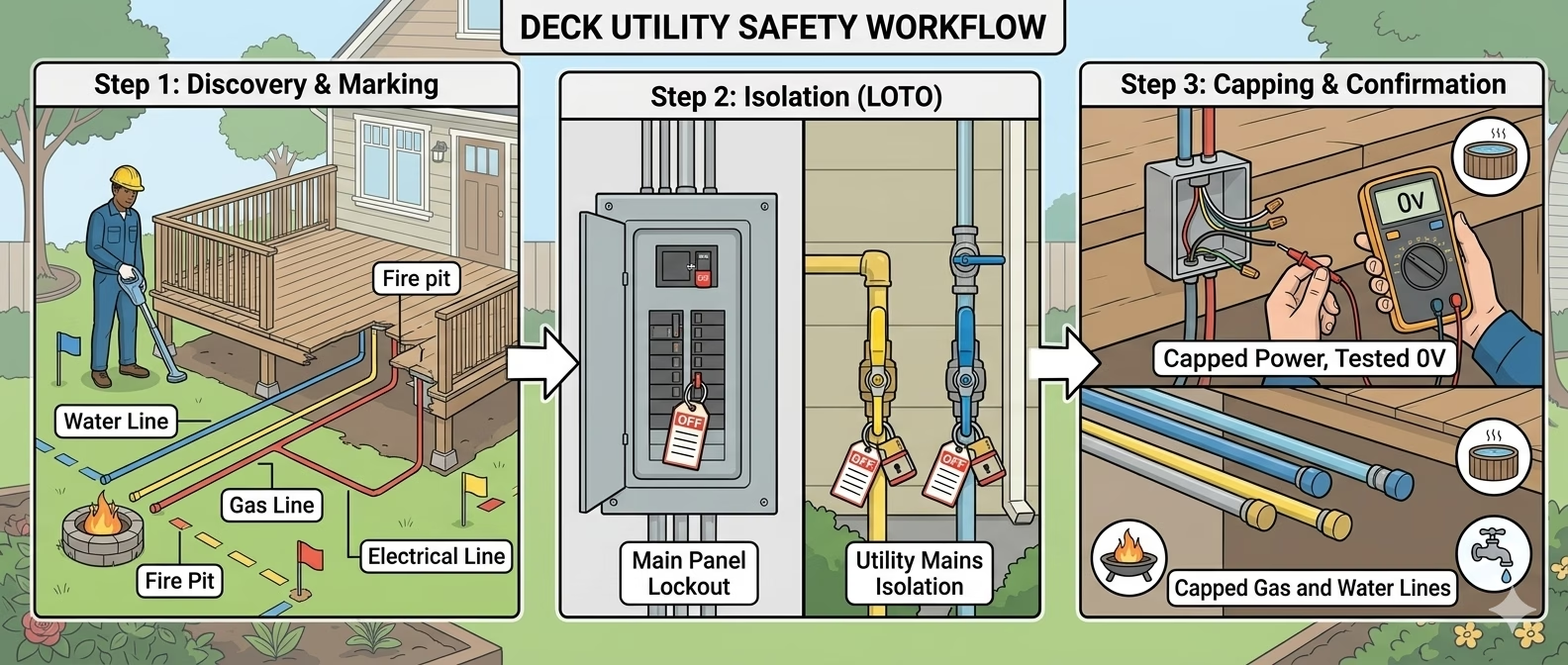
During a professional tear-down, the crew must carefully locate and protect these connections. Before any structural tearing begins, a qualified professional must disconnect, cap, and confirm that all power lines are completely dead to eliminate fire risks and shock hazards. If a heavy support post is wrapped around an active utility pipe, the teardown must be controlled and precise to ensure nothing cracks or breaks.
Palo Alto’s Strict Debris & Recycling Rules
Tearing down a deck creates thousands of pounds of construction and demolition waste, including heavy framing lumber, railings, stairs, and metal hardware. You cannot simply pile this material into standard residential trash cans or rent a random dumpster without checking local codes.
The City of Palo Alto enforces strict source-reduction and recycling requirements. For any structural demolition, local guidelines require property owners to manage waste responsibly. You must track and sort your materials, ensuring that recyclable components are diverted away from landfills and hauled to certified local processing facilities.
Additionally, ensuring you use authorized waste container pathways is a strict local requirement. Bay Area Demo & Hauling manages this entire process for you by properly sorting recyclable wood, metal, and materials before hauling them away, making sure your project meets all local environmental guidelines seamlessly.
California’s Treated Wood Waste (TWW) Laws
A massive factor in deck removal is dealing with pressure-treated lumber. Almost all outdoor decks are built using wood that has been chemically treated to resist bugs and moisture. In California, pressure-treated lumber is legally classified as Treated Wood Waste (TWW).
Because the chemicals used to protect the wood can be hazardous if dumped incorrectly, you cannot mix old deck boards with standard trash, burn them, or dump them in standard landfills. California enforces strict compliance rules requiring TWW to be transported exclusively to approved facilities authorized to handle chemical-treated lumber. A professional crew ensures all your old deck boards are logged, hauled, and disposed of in perfect alignment with state environmental regulations.
Structural Demo vs. Concrete Footing Removal
When planning your project budget, you need to decide what happens to the base underneath the framing.
Leaving the Slab or Footings in Place
Some homeowners choose to keep the existing concrete footings—the heavy concrete blocks buried deep in the dirt to anchor the wooden posts. If you plan to rebuild a new deck in the exact same footprint, you may be able to leave these blocks intact to save on labor and material costs. Similarly, if your deck was built over an old concrete slab patio, you can have the wooden framework cleared away while keeping the concrete pad completely intact to use as an open backyard patio area.
Full Concrete Base Removal
If the old concrete footings are cracked, shifting, or in the way of a completely new landscaping project or driveway extension, they must be dug up. Breaking up thick, reinforced concrete footings requires specialized heavy breaking machinery and automated loaders. Because concrete is dense and heavy, adding full-scale Concrete Removal to your project scope will increase your overall haul-off weight, so it should always be included in your initial quote.
Step-by-Step: How to Plan Your Project
Your exact deck replacement path can vary, but most successful projects follow a clear process like this:
- Collect Property Details: Measure your deck’s size, height off the ground, and distance from fences, trees, or property lines.
- Verify Hidden Utilities: Check for active electrical wiring, plumbing connections, or gas lines running beneath or through the deck boards.
- Determine the Footprint’s Future: Decide whether your old concrete footings or an underlying concrete patio slab should stay or go.
- Clear Personal Belongings: Remove outdoor furniture, grills, planters, and lighting fixtures before the crew arrives.
- Schedule the Demolition: Once a professional crew completes the teardown and thoroughly sweeps the site, a final inspection or closeout review may be required depending on your permit type.
The True Risks of Skipping Proper Planning
Trying to tear down a major backyard structure without a clear plan or skipping compliance steps can backfire significantly. A structural teardown carries severe risks:
- Code Enforcement Issues: Neighbors frequently report loud demolition noise. If code enforcement officers find unsafe structural work or improper treated wood disposal, they can issue an immediate “Stop Work Order” and impose possible fines, added fees, or project delays.
- Real Estate Complications: When you try to sell your home in the future, title companies and buyers verify public property records and look for hidden structural changes. If your home maps show a large deck system that was altered or removed improperly, it can stall your sale or force you to pay retroactive fees.
- Insurance or Liability Issues: Amateur work can create serious insurance or liability problems if damage occurs, such as accidentally disrupting an overhead power line, damaging a neighbor’s structure or fencing, or cracking a shared concrete driveway.
Why Hire a Professional Palo Alto Demolition Company?
Attempting a DIY deck demolition over a weekend is highly dangerous. Old decks hide rusted fasteners, heavy beams, unstable stairs, and sharp nails buried in the weathered wood framing. Raised decks add another layer of risk because heavy components can shift or collapse unexpectedly during removal.
By partnering with a licensed, insured, and locally recognized team like Bay Area Demo & Hauling, the logistical headaches disappear:
- Property Protection: The crew sets up precise physical barriers to isolate the workspace, shielding your surrounding driveways, landscaping, siding, windows, and side fences from falling debris.
- Permit & Hauler Compliance: Working with an established local team ensures your project meets Palo Alto’s strict contractor licensing laws, environmental tracking, and proper treated wood waste disposal protocols.
- Total Site Turnover: The crew manages the teardown from start to finish, efficiently sorting out recyclable wood, metal, and concrete before hauling it off. You are left with a pristine, raked, and completely cleared footprint that is instantly ready for your next home improvement project.
If you are not sure where to start, take a few photos of your deck, note whether it has power, and decide whether you want the concrete footings removed. Bay Area Demo & Hauling can review the project details, explain the demolition scope, and provide a fast quote for safe teardown and hauling. Explore our professional Deck Removal in Palo Alto services to request a fast quote, or check out our related Shed Removal and Residential Demolition options to jumpstart your property renovation today.
Checklist: Before You Request a Quote
Before you request a quote, gather these details to help get the most accurate price estimate for your project:
- Photos of the full deck (Take pictures from a few different angles, including underneath if safe)
- Approximate deck size
- Whether it has power, gas, or plumbing hookups
- Whether it is detached or attached to the home
- Whether the slab or buried concrete footings should stay or go
- Photos of yard access points, gates, fences, and driveways
Frequently Asked Questions
How do I know if my deck needs repair or removal?
Repair may be enough if the damage is limited to cosmetic wear, a few loose surface boards, or minor railing adjustments. Removal is the better choice if the structural frame is rotting, stairs are completely unstable, support posts are failing, or the deck has begun pulling away from the side of the house.
Can I tear down my deck but keep the concrete patio underneath?
Yes. Many Bay Area homeowners build wooden decks over old concrete patios or slabs. If you want the wooden framework removed while keeping the concrete pad completely intact to use as an open patio space, just let the demolition crew know ahead of time so they can plan to shield the concrete surface from heavy impact damage.
Who handles utilities and power before deck demolition?
You should make Bay Area Demo & Hauling your very first call. While major electrical teardowns require a licensed electrician, our crew can handle simple wire capping on-site. During your initial site visit, we will personally inspect your deck’s power setup and determine exactly what needs to be done. You do not need to worry about hunting down an electrical company first—let our team look at the project and map out the safest, easiest path forward for you.
What factors affect deck demolition cost?
The total cost depends on several main variables. These include the deck’s overall square-foot size, height off the ground, how easy it is for trucks to access the backyard, the total volume and weight of the construction debris, and whether buried concrete footings need to be dug up and hauled away.
Can deck demolition debris be recycled?
Standard metal railings and clean materials can be recycled, but because structural deck boards are almost always made from chemical-treated wood lumber, they are classified as Treated Wood Waste (TWW). This means they cannot be sent to standard recycling centers and must be transported to authorized waste sites that handle treated building materials according to California state law.
Do I need a permit to demolish a small backyard shed in Palo Alto?
If a detached backyard shed is 120 square feet or less, it is generally exempt from a city building permit. However, this legal exemption only applies if the shed does not contain any electrical wiring, gas lines, or plumbing hookups. If your shed is larger than 120 square feet or is wired for power at any size, you must secure a permit from the city.