
Fact-Checked & Reviewed for Technical Accuracy
Reviewed for Accuracy
- Author: Bay Area Demolition and Hauling Editorial Team
- Reviewed by: John Alviter
- Reviewer Role: Founder & Lead Demolition Contractor
- Company: Bay Area Demolition and Hauling
- Google Business Profile: Bay Area Demolition and Hauling
- Review Snapshot: As of September 2026, our Google Business Profile shows 271 reviews with a 5.0 average star rating. Because review counts change, homeowners should check the live profile before hiring.
- CSLB License Number: #1123506
- License Classification: C-21 (Building Moving/Demolition)
- Last Reviewed: September, 2026
Have you ever looked out into your backyard and seen an old, rotting garage taking up valuable space? Maybe the roof is sagging, the wood is splitting, and the heavy door does not even open anymore. You might be dreaming about pulling it down and replacing it with a clean driveway, a beautiful green lawn, a new workshop, or a modern Accessory Dwelling Unit (ADU).
But before you start tearing down walls, you have to stop and think about the local rules.
The biggest question most homeowners in the Bay Area ask before clearing out space is simple: Do you need a permit to demolish a garage in San Jose?
In many cases, yes. Garage demolition involves a real structure, not just a pile of loose junk. That structure may include framing, roofing, siding, electrical wiring, a concrete slab, doors, and windows.
Understanding the exact city rules can save you from costly fines and project delays. Let’s break down everything you need to know about San Jose permit laws, utility dangers, and how to safely get your backyard back.
The Quick Answer for San Jose Property Owners
Most San Jose homeowners should check permit requirements before demolishing a garage. The City of San Jose requires building permits for projects involving the demolition of buildings and structures. Small accessory buildings or structures of 120 square feet or less may be exempt only when they are not electrically wired. This means an old detached garage will often need a permit, especially if it is larger than 120 square feet or has power.
Why Does San Jose Require a Demolition Permit?
It is your property, so it is natural to wonder why the city cares if you want to pull down an old, broken building.
Municipalities enforce rules around structural demolition to protect you, your neighbors, and the local environment. If a building comes down incorrectly, things can go wrong very fast. The city reviews your project plans for several major reasons:
-
- Property Line Safety: Many older garages sit directly on or right next to back fences, side yards, and neighbor property lines. A permit helps confirm the teardown is planned carefully so nearby areas are not damaged.
-
- Utility Hazards: Garages frequently have live electrical wires running to them for lights, switches, and wall outlets. A permit process ensures these are handled correctly to prevent shock or fire risks.
-
- Property Values and Disclosures: The City of San Jose notes that permits and inspections help maintain property value. Additionally, state law requires home sellers to disclose unpermitted work when selling a property.
Detached vs. Attached Garages: Structural Differences
How your garage was built plays a major role in how complex your permit review and demolition project will be.
Detached Garages
A detached garage stands completely on its own, separate from your main house. These teardowns are typically straightforward. The primary concerns for the crew are safe backyard access, utility disconnections, protecting nearby fences, and managing the heavy debris haul-off.
Attached Garages
An attached garage shares walls, structural framing, roofing systems, or concrete foundations with your primary home. Removing an attached garage is highly complex because cutting into the structure can compromise the safety and stability of your entire house. Because of this, an attached garage may require additional review before demolition starts.
The Danger Zone: Managing Garage Utilities Safely
You should never treat garage demolition like a basic junk removal job. One of the biggest mistakes a property owner can make is assuming a garage is safe to tear down just because it looks old and abandoned.
Many garages have power running to them. This could be a single light bulb fixture, a series of outlets, a garage door opener, or an independent electrical subpanel.
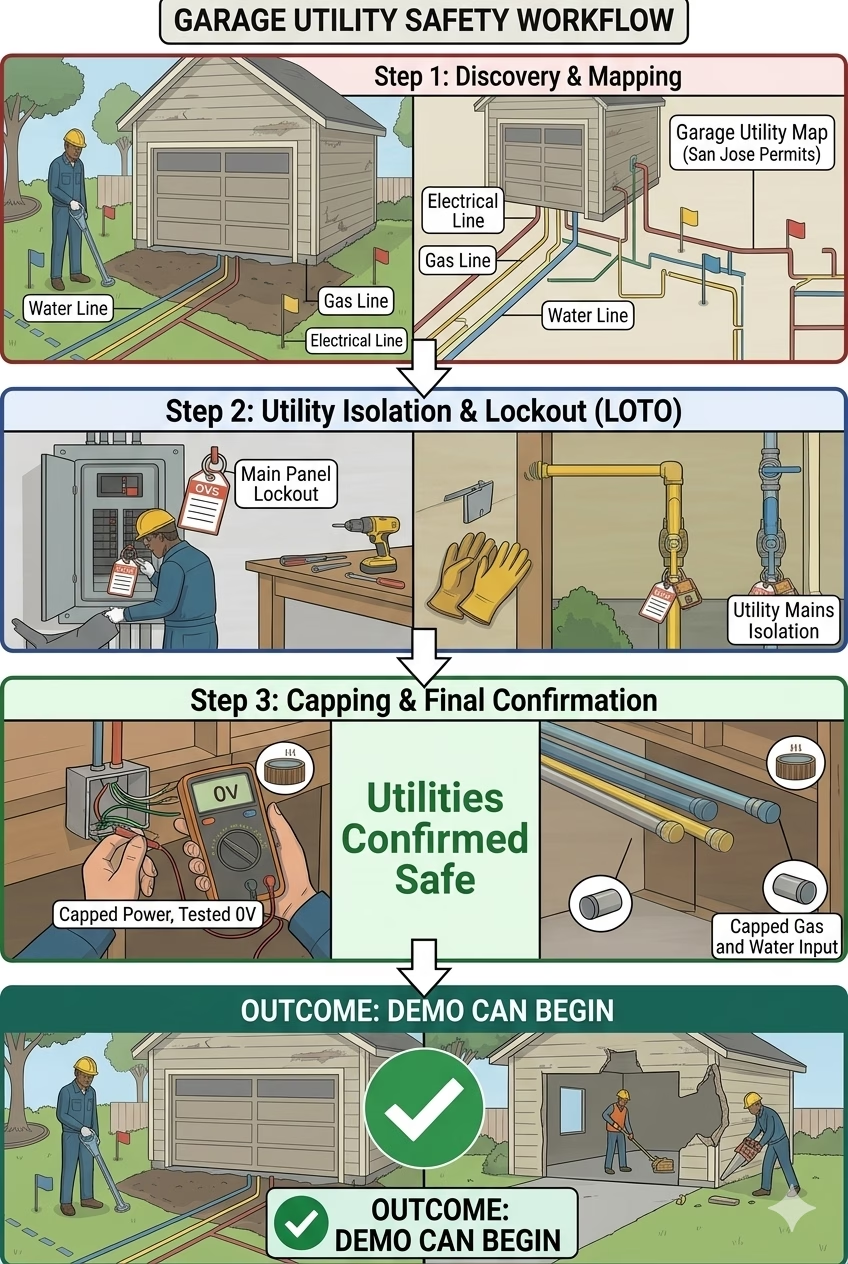
San Jose building guidelines clearly state that electrical work requires a specific electrical permit to eliminate fire risks and shock hazards. Before any structural tearing begins, a qualified professional must disconnect, cap, and confirm that all power lines are completely dead. If your garage has gas pipes or water lines, these utilities must also be safely cut back and capped at the main source.
San Jose’s Strict Debris & Recycling Laws
Tearing down a garage creates thousands of pounds of mixed construction and demolition waste, including heavy wood framing, asphalt roofing shingles, siding, stucco, metal tracks, and glass. You cannot simply pile this material into standard trash cans or rent a random dumpster without checking local laws.
The City of San Jose operates the Construction and Demolition Diversion Deposit (CDDD) program. This program applies to all residential structure demolitions. When you submit your permit, the city charges a deposit based on the total square footage of the building. To get your deposit money back, you must submit official weight receipts proving that you properly sorted and recycled the debris rather than dumping it straight into a local landfill.Additionally, San Jose has an authorized hauler program. If your project requires a temporary roll-off waste bin placed on the property, only debris removal companies with prior city approval are legally allowed to haul those bins away.
Structural Demo vs. Concrete Slab Removal
When planning your project budget, you need to decide what happens to the floor underneath the building.
Leaving the Slab In Place
Some homeowners choose to keep the existing concrete floor. If the foundation is still flat and in good condition, you can have the wooden walls and roof cleared away while leaving the concrete pad behind. This pad can be repurposed for outdoor parking, a basketball court, or an open backyard patio.
Full Concrete Base Removal
If the concrete floor is badly cracked, buckled by tree roots, or tilting, leaving it in place does not make sense. You will want to clear out the entire footprint. Breaking up thick, reinforced concrete slabs and deep structural footings requires heavy breaking machinery and automated loaders.
Because concrete is incredibly dense and heavy, adding full-scale Concrete Removal to your project scope will increase your overall hauling weight and labor costs, which should be factored into your initial quote.
The True Risks of Skipping the Permit Process
Trying to bypass the city planning department to save a few dollars can backfire significantly. Demolishing a structure without an active permit carries severe risks:
| The Risk Type | Real-World Consequence |
| Code Enforcement Fines | Neighbors frequently report loud demolition noise. If a code officer visits your property and sees unpermitted work, they will issue a formal “Stop Work Order” and impose possible fines, added fees, or project delays. |
| Real Estate Complications | When you try to sell your home in the future, title companies and buyers verify public property records. If tax maps show a garage but it was removed without a permit, it can stall your sale or force you to pay retroactive fees. |
| Insurance or Liability Issues | Unpermitted work can create insurance or liability problems if damage occurs, such as disrupting an overhead power line, damage to another structure or fencing, or cracking a neighbor’s concrete driveway. |
Why Hire a Professional San Jose Demolition Company?
Attempting a DIY garage demolition is highly dangerous. Unstable wall framing can buckle unexpectedly, heavy roofing rafters can collapse, and sharp rusty fasteners or metal garage door tracks pose immediate safety risks.
By partnering with a licensed, insured, and locally recognized team like Bay Area Demo & Hauling, the logistical headaches disappear:
-
- Property Protection: The crew sets up precise physical barriers to isolate the workspace, shielding your surrounding driveways, landscaping, and side fences from falling debris.
-
- Permit & Hauler Compliance: Working with an established local team ensures your project meets San Jose’s strict contractor licensing laws, tax requirements, and authorized waste-hauling codes.
-
- Total Site Turnover: The crew manages the teardown from start to finish, efficiently sorting out recyclable wood, metal, and concrete before hauling it off. You are left with a pristine, raked, and completely cleared footprint that is instantly ready for your next home improvement project.
Ready to clear out your backyard safely and legally? Explore our professional Garage Demolition Services to request a fast quote, or check out our related Shed Removal and Residential Demolition options to jumpstart your property renovation today.
Checklist: Before You Request a Quote
Before you request a quote, gather these details to help get the most accurate price estimate for your project:
-
- Photos of the garage
-
- Approximate size
-
- Whether it has power, gas, or plumbing
-
- Whether it is detached or attached
-
- Whether the slab should stay or go
-
- Photos of access points, gates, fences, and driveways
Frequently Asked Questions
Do I need a permit to demolish a detached garage in San Jose?
Usually, yes. San Jose requires building permits for the demolition of buildings and structures. Small accessory structures of 120 square feet or less may be exempt only when they are not electrically wired. Because most detached garages are larger than that or have active power, you should expect to secure a permit before work begins.
Can I tear down my garage but keep the concrete slab?
Yes. Some projects only include removing the wooden or metal garage structure above ground, allowing the existing foundation to stay in place. Others include tearing up the concrete slab, footings, and damaged concrete too. If you want the entire footprint cleared down to the dirt, make sure slab removal is included in your project scope from the start.
Who disconnects power before garage demolition?
You should make Bay Area Demo & Hauling your very first call. While major electrical teardowns require a licensed electrician, our crew can handle simple wire capping on-site. During your initial site visit, we will personally inspect your garage’s power setup and determine exactly what needs to be done. You do not need to worry about hunting down an electrical company first—let our team look at the project and map out the safest, easiest path forward for you.
What factors affect garage demolition cost?
The total cost of a garage teardown depends on several main variables. These include the overall square-foot size of the garage, its construction type, and how easy it is for trucks to access the work area. Costs also change based on the total volume of debris, active utility lines, and whether you choose to remove the underlying concrete foundation slab.
Can garage demolition debris be recycled?
Yes, many common demolition materials can be recycled. This includes metal roofing, wood framing studs, concrete base pieces, and cardboard. San Jose has strict construction and demolition waste rules, so materials often need to go to certified local recycling facilities or be collected in approved debris boxes.
Do I need a permit to demolish a small backyard shed in San Jose?
If a detached backyard shed is 120 square feet or less, it is generally exempt from a city building permit. However, this legal exemption only applies if the shed does not contain any electrical wiring, gas lines, or plumbing hookups. If your shed is larger than 120 square feet or is wired for power at any size, you must secure a permit from the city.